
<div style=”margin-bottom:5px”> <strong> <a href=”https://www.slideshare.net/CeliaMunson/models-of-pastoral-care-and-counseling” title=”Models of Pastoral Care and Counseling” target=”_blank”>Models of Pastoral Care and Counseling</a> </strong> from <strong><a href=”http://www.slideshare.net/CeliaMunson” target=”_blank”>Celia Munson</a></strong> </div>
Tag Archives: pastoral care
June 2014 Updates
Here are a few things in the recent past, present, and recent future.
1. Gabby Mecca (from Virginia in the US) is joining our group for a few weeks… assisting us in Disaster Response, and Hospital work and more.
2. May 25 – June 5th. Visayas Trip. This was our… 4th or 5th trip to the area devastated by Typhoon Yolanda (aka Haiyan) since December. This trip was in partnership with PBTS, PWMU, and others. 6 team members went. Celia, Alexis, Joylene, Jeanard, Gabby, and Lea were at two evacuation centers in the Tacloban (Leyte) area for half of the trip. Half did Vacation Bible School (Faith, Hope, Love) with the children, while the other half did Psychosocial Processing with the adults. Joylene and Jeanard went on to Mindanao, while the other four travelled to Concepcion, Iloilo. They split their work there between two islands, Mangalabang, and Baliguian. Their they continued the work done in Tacloban, and added the initial groundwork towards a community development program there.
3. June 2nd. This was the start of an introductory clinical pastoral training group led by Celia and assisted by Jehny and Becky. 6 trainees are Fr. German, Sr. Amelia, Alexis, JB, Gabby, and Joel. Most of their practical ministry work will be done through Baguio General Hospital.
4. June 19th. “Models of Pastoral Care and Christian Counseling.” This will be a mini-seminar on various forms of Christian ministry in the area of counseling and pastoral care. The goal is a basic understanding of hte different goals of each and their belief regarding the relationship between psychology and theology. This is a free seminar starting at 6:30pm and ending at 9pm at Philippine Baptist Theological Seminary (Baguio City, Philippines)

Children in Mangalabang Island
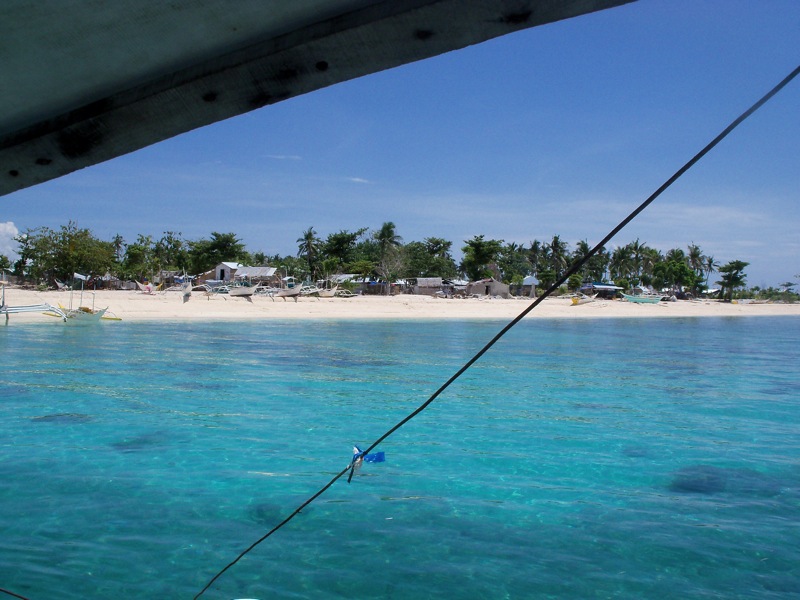
Baliguian Island
April 2014 Updates
A lot going on. Here is some.
1. Our Disaster Response team (partnership of PBTS and Bukal Life Care) is continuing its work in the Visayas particularly with Stress debriefing. They will return to Baguio on April 9th.
2. March 24. Bukal Life Care (led by Cori and Jehny) are training AV-STM missionary trainees in “Basic First Aid” and “The Baggage Cart.” AV-STM will send out its “STMers” in April.
3. March 26. We start CPE 2014 Summer Intensive.
4. March 31. Didactics start CPE. Monday (March 31), we will be presenting an Introduction to Pastoral Care. The focus will be on (1) The roles of pastoral care from a historical standpoint, (2) an overview of the Clinical Pastoral Care movement, and (3) present models for relating psychology and theology in counseling. It will start at 8:30am and continue until 11:30am. Although this seminar is primarily for CPE trainees as their first Didactic, others are welcome to join if they wish. It will be held at Philippine Baptist Theological Seminary, Baguio City. There is no charge, but we would appreciate letting us know if you are attending. Text 0933-302-0373.
Training in Guindulman
We have a partnership with PBTS (both seminary and student council) for work in the Visayas. The first step was to do training in Guindulman, Bohol. The team includes Alexis, a member of the staff of Bukal. Joylene, who has been a trainee of Bukal, assisted. From PBTS, Ptr. Ronnie, Fritz, and Jeremiah (JB) joined. This was done in partnership with Vis-Con Southern Baptist Churches (represented and supported by Ptr. Rolly, and Dr. Erlyn). Ptr. Erwin from Guildulman served as host along with his church.  22 trainees from all over Bohol joined. Training from Bukal was primarily in pastoral care, crisis care (and psychological first aid), and teaching methods. PBTS and Vis-Con supported training in church planting, church growth, discipleship, and Baptist Distinctives. The training went well. Following the training, two had to continue on to other work. However, Alexis, Fritz, and JB continue their work in crisis care (in response to the earthquake and typhoon in the Visayas in late 2013). They will be in Bohol, Cebu, Leyte, and Iloilo for the next two weeks in this work.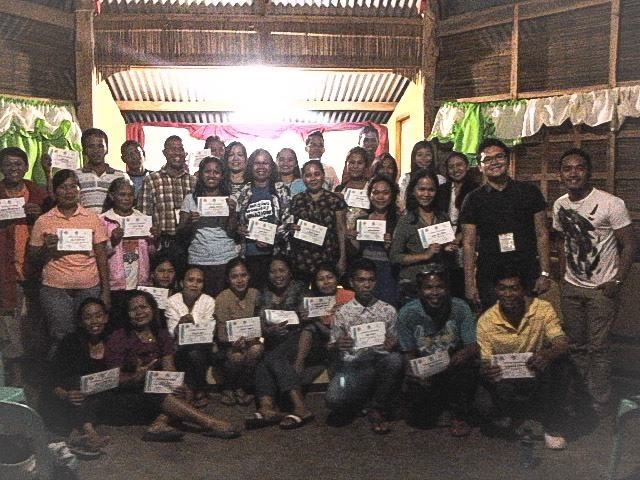
2013 Activities
Here are some of our activities over 2013.
January. Pastoral Care Basics. Led by Celia Munson. At Serving Neighbors Network, Baguio City. Training. 2 days. 8 trainees
February. ALS visitation and gift-giving at Crystal Cave, Baguio, (12 helped) and Mother and Children’s Health Outreach, San Isidro, Agoo (80 helped). Organized by Angie Gomez.
February 22-23 Life Care Training Led by Bob and Celia Munson. At Sefton Village, Santiago, Isabela. 1.5 days. 20 trainees.
March AV-STM Member Care Training. Celia: Basic First Aid for STMers.
May. Missionary Member Care. Led by Robert Munson. (2-week Summer module). PBTS.11 trainees
May 23 Stress Management. Led by Dr. Sim Dang-Awan. Dept of Agriculture, Banaue.
May. Missionary Member Care Trip to Cambodia. Jehny Pedazo. AG Team and AV-STM.
June 8 Crisis Care Training. Led by Celia Munson. At “The Hub” Student Center, La Trinidad. 1 evening. 7 trainees
June 13-14. Disaster Response,Buguias, Benguet. 100 people. Training and Stress Defusing.
June 25. Formal Agreement with PBTS on partnering on ministry, facilities, and training.
July. Loss and Grief seminar. Led by Celia. At Trinidad Baptist Church.
August. Growth Groups. Led by Joyce Gray. August – October 2013. PBTS.6 trainees
September 26. Solidarity for families and PWDs. AVRC Region 1. Led by Celia.
October 4. Child Abuse. 1.5 hour lecture by Celia Munson at Benguet State.
November. Disaster Response/NOVA training, PBTS, 4 hours, 25 trainees.
November. Crisis Care/Child Traumatic Stress, AV-STM, 4 hours, 15 trainees. Led by Jehny.
November. Disaster Response, Ormoc and Tacloban. Led by Dr. Nori Lacquian. Alexis joined. Relief work and defusing.
December. Disaster Response, “Iloklan Team.” Numancia, Iloilo, and Baliguian, Concepcion, Iloilo. Defusing, Relief Goods, Training.
December. Disaster Response, Cebu and Ormoc. Stress Defusing, Training for ministry leaders in Cebu.
December. Disaster Response, Bilar, Bohol. Relief goods, Defusing, and Training led by Bob, Celia, and Dr. Erlyn Santos.
December 27-28. “Project Leyte” Crisis Debrief/Defuse Training. Organized by PNA-Baguio/Benguet, PGCA-Baguio/Benguet, Zero Distance to the Philippines, and Bukal Life Care. Dec 27/28. Modules led by several including Celia and Jehny.
CPSP Farrell Symposium. October 25-26, 2013
2013 Annual Viola and William Farrell Symposium on Pastoral Care & Counseling. At Philippine Children’s Medical Center. October 25-26, Quezon City. See Flyer.

Theology and Psychology: Brief Consideration
We get questions at times with regards to the relationship between the Christian faith and Psychology when it comes to counseling. Between various schools of thought, some of whom appear to be at war with each other, it can be quite difficult to know what is what, to say nothing about what is right. We are not going to try to explain all of the differences. A good place to start would be “Psychology & Christianity: Five Views” edited by Eric L. Johnson, with contributors from five schools David G. Myers, Stanton L. Jones, Robert C. Roberts, P. J. Watson, John H. Coe, Todd W. Hall, David A. Powlison. The five “schools” are:
–Levels of Explanation
-Integrationist
-Transformational Psychology
-Christian Psychology/Counseling
-Biblical Counseling
Transformational Psychology on first glance at least seems to simply be a type of Christian Psychology. Because of lack of detailed knowledge of Transformational Psychology, and because our counseling center tends to work mostly within the Pastoral Care movement, the diagram shows Pastoral Care instead.
If the X-axis shows the focus of the counseling. The farther to the right, the greater the emphasis on theology. The farther to the left, the greater the emphasis on (secular) psychology. Near the origin on the X-axis is a more balanced approach. The Y-axis shows the philosophy of the counseling. The farther positive (“up”) the greater the philosophy towards integration of theology and psychology. The farther negative (“down”) the greater the philosophy of separation, or reducing dialogue between theology and psychology in treatment.
It is important to note that the X-axis has on the positive side “theology” not “Bible.” There is a couple of reasons for this. For one, while Bilbical Counseling describes its basis as the Bible, not everyone would agree that its principles are Biblical. Rather, it is safer to say that that Biblical Counseling is based on a theological understanding of the role of the Bible in counseling. A second reason for using the term “theological” is that the Pastoral Care movement takes very seriously the integration of faith/theology and psychology, but some practitioners utilize theologies that do not have the Bible as its base.
Looking at the four quadrants, the five views covered produce a continuous (and overlapping) curve. At one extreme in the lower left is the “Levels of Explanation” view. It tends to focus on Psychology and separates human problems into categories (levels of explanation)… some that are the domain of psychology, and some that are the domains of other specialties. In the upper left are the Integrationists. While all in the upper quadrants could be described as integrational, here the term tends to be used by those that focus more on psychology than on theology. Those that are more integrationist (strong) see a greater role for theology. Those that are less integrationist (weak) see a lesser role for theology.
In the upper right quadrant are two groups. One is Christian Counseling and the other is Pastoral Care. Arguably, these two greatly overlap. Both place a strong role for theology but seek to be effectively informed by findings in secular psychology that have been found useful. Since both Christian Counseling and Pastoral Care overlap, they could easily be seen as one school. They are often kept separate for two reasons. First, they developed differently. Christian Counseling came as a reaction to integrationists on one side and Biblical counseling on the other, in the 1980s. Its underlying theology tends to be relatively conservative. Pastoral Care is older coming from the Clinical Pastoral Training movement in the 1920s and beyond. While it does not, strictly speaking, have only one underlying theological perspective, the average pastoral care practitioner would be seen as more theologically liberal than the average Christian counselor. In the lower right quadrant is Biblical Counseling. It was a reaction to the left quadrant practitioners in the early 1970s. Originally known as Nouthetic Counseling. It takes a more negative view of psychological principles and methods that are seen as not coming from the Bible. As such there is a strong separation between counseling they feel is consistent with the Bible, and counseling based on sources outside the Bible. Recent movements in Biblical Counseling have sought to find more integration, but separation still dominates the movement.
Perhaps it is best not to focus on “Who is right” and focus on what each has to offer. Biblical Counseling tends to focus on sin and behavioral changes. In some cases that is the care needed. For serious psychoemotional problems such as personality disorders and psychoses, the integrationists and levels of explanation practitioners are better prepared to assist recovery. For problems such as conflicts, being “sinned against,” self-esteem, and such, perhaps Christian counseling and Pastoral Care have more tools to help.
When it comes to treatment, one size may NOT fit all.
What does AAPC mean by “certified” pastoral counseling aka “pastoral psychotherapy”
Short Article/Discussion regarding Pastoral Counseling: HERE
When is it NOT okay to say “God is Good”?

People of faith often know the right thing but still end up saying the wrong thing. Commonly, bumper sticker phrases like “It must be God’s will,” “Everything will work out,” and “I’m sure it’s for the best” pepper our conversations with people struggling. I would like to think that we know better than to say this, but somehow fall into meaningless aphorisms when we under pressure to give a word of wisdom.
A good example of this is the bumper sticker phrase “God is Good, All the Time.” Rather than get into the question of whether God IS indeed always good (from our perspective), let’s consider if there are times when the phrase is not useful in conversation. Try the following Blog Post for this question:
The preacher shouted out, “GOD IS GOOD!” And the congregation responded, “ALL THE TIME!” At which point the choir picked up it’s cue:
God is good all the time
He put a song of praise in this heart of mine
God is good all the time
Through the darkest night, His light will shine
God is good, God is good all the time
But Christians have developed the bad habit of saying “God is good” in a way that suggests that sometimes God is not good. This is because, whether we like it or not, some elements of the prosperity gospel has seeped into the wider Christian subculture.
The rest of the article is HERE
 Bukal Life Care