Questions About Counseling at Bukal Life Care

Periodically, we get questions about the counseling services we provide. Here are some things that may be of assistance.

#1. We like to clarify that we do “PASTORAL COUNSELING.” Does that make a difference? Well, somewhat. Counseling without other descriptors in the Philippines normally refers to an activity that is done by a registered psychologist, psychiatrist, or guidance counselor. Pastoral counseling is a form of counseling that integrates spiritual with psychoemotional aspects of the person. In some settings, this is referred to as “spiritual counseling,” while in others, it is known as “biblical counseling.” We prefer not to use the latter terms. First, spiritual counseling suggests that it is only concerned with “spiritual” matters and does not consider the whole person in their whole situation. Biblical counseling, on the other hand, is often used more negatively — frankly, often to demean other forms of counseling as being “unbiblical.” We prefer pastoral counseling as our term since it lacks those presumptions, we believe.

#2. We don’t have regular hours for pastoral counseling. Therefore, you need to contact us to set up an appointment. There are different ways. It can be done through our contact page on our website. It can be done by emailing bukallife@gmail.com or bukallifecare@gmail.com. We don’t have regular hours for pastoral counseling for a couple of reasons. First, our primary ministry is in training ministers in Clinical Pastoral Education. Our schedules are primarily built around that. Second, our team members are all volunteers. We don’t have a staff. We don’t have employees. Therefore, we don’t have anyone sitting down in our office waiting for people to simply walk in.

#3. We do not normally charge for pastoral counseling services. We are a ministry, not a business, and our limited expenses for the ministry are covered by training fees. However, if the meeting leads to a series of appointments, the pastoral counselor MAY seek some payment for those subsequent meetings. Again, our team is a group of volunteers. As such, we encourage generosity in ministry, but we don’t ask volunteers to commit to weeks of pastoral counseling sessions without any financial support. If that happens, any fees would be agreed on mutually before the meeting.

#4. Those who do pastoral counseling with us are certified under CPSP-PH based on the standards established by CPSP (College of Pastoral Supervision and Psychotherapy). This is a private certification, as is normal with pastoral counseling, and not a form of licensing. As such, we don’t do counseling that is required for legal matters in the Philippines, such as for marriage or annulment. We certainly do premarital or marital counseling, but not to meet government requirements.

#4. We are in no way in conflict with ‘regular’ counseling. We do work with psychologists, psychiatrists, psychometricians, and guidance counselors. Furthermore, we have referred people to specialists when needed (such as for those we believe may fit into DSM-V categories) and at times have worked in partnership with these professionals.
Updates– Sep/Oct 2019

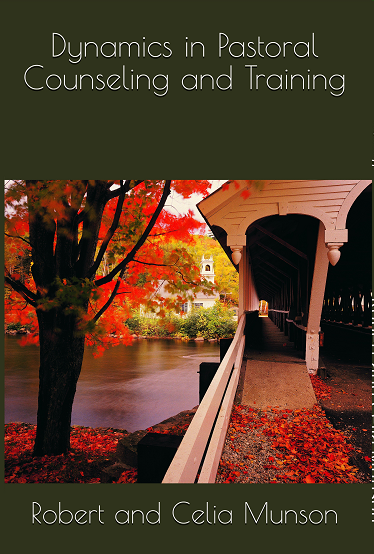
  1.  New Book.  We have just published our second bookFront Art in pastoral ministry. It is called Dynamics in Pastoral Counseling and Training. It is primarily for CPE trainees, and especially for those in 2nd unit and beyond. It is the follow-on to our first book, The Art of Pastoral Care. Click on the titles to find where they are available online. We also have them at our office (the latest one will be available in our office in a few days.)
  2. This Saturday, September 23, Chaplain Vo will be going with a group to San Jacinto, Pangasinan to lead a seminar in the Basics of Pastoral Counseling.
  3. We presently have two groups of CPE. Chaplain Lyn is leading a group of 5. Chaplains Celia and Vo have a group of 7.  Will be finishing both groups by November.

Counseling and Coaching Update

Made a few changes. This Presentation is our most popular, by far, on Slideshare.net, so it was time for a bit up upkeep.

7 Rules of Pastoral Conversation

Theologian Max Warren (1904-1977) came up with 7 Rules for Interreligious Dialogue (IRD). Each of these are quite valuable. But each of them seem also to provide the basis for an equivalent rule for Pastoral Conversation. So we will list each rule both for IRD and for Pastoral Conversation (PC).

Rule #1:  Acceptance of our Common Humanity

IRD.  Dialogue is not between two ideologies or religions, but between two people… created in the image of God. 

PC.  The client is not a label or a category of person. The client is a human being created in God’s image… fearfully and wonderfully made.

Rule #2:  Divine Omnipresence

IRD.  Entering into a dialogue, one is not entering alone. God is there, and has prepared the situation long before one arrived.  

PC.  Expect that God is present in every pastoral conversation and before every conversation.

Rule #3:  Accepting the best in the other

IRD.  Don’t focus on what is bad about other religions… also freely acknowledge their good points. Be open to admit failings in one’s own faith as well.

PC.  Enter the conversation non-judgmentally. The client is not defined by his or her weaknesses and failures. Acknowledge you have weaknesses as well… as a ‘wounded healer.’

Rule #4:  Identification

IRD.  Attempt to understand them as if you were one of them. Think incarnationally.  Imaginatively “walk in their shoes” to understand what they believe, why they believe it, and why it makes sense to them.

PC.  Try to understand the client’s situation through the eyes of the client. Seek, as much as possible, to understand what he/she is going through.

Rule #5:  Courtesy

IRD.  Dialogue with identifiable respect– identifiable by the other in ones words, demeanor, and actions.

PC.  Respect your client, and demonstrate that respect in word and deed.

Rule #6:  Interpretation

IRD.  Sharing one’s faith to another is not one of proclamation or didactics. Rather it is one of interpretation… contextualization… translation. Attempting to make one’s faith understandable within the symbol structure of the other, NOT one’s own structure.

PC.  Demonstrate God’s love and message for the client in a manner that the client can identify with and respond to. This means focusing on how he/she thinks and feels rather than how you think and feel.

Rule #7.  Expectation

IRD.  God is at work in the dialogue, and one should be expectant that this work will ultimately bear fruit in one way or another… in the other AND in oneself. 

PC.  God ultimately is the great healer. As such, recognize that God is the one who is at work and will continue to work long after the conversation is over.

While it is certain that these are not all the rules associated with pastoral conversation (for example, a good 8th rule is that one should listen more and talk less), these 7 still are a good starting place —both in interreligious dialogue, and pastoral conversation.

Models of Pastoral Care, Coaching, and Counseling

<div style=”margin-bottom:5px”> <strong> <a href=”https://www.slideshare.net/CeliaMunson/models-of-pastoral-care-and-counseling&#8221; title=”Models of Pastoral Care and Counseling” target=”_blank”>Models of Pastoral Care and Counseling</a> </strong> from <strong><a href=”http://www.slideshare.net/CeliaMunson&#8221; target=”_blank”>Celia Munson</a></strong> </div>