What is “Life Care

Okay, have to admit the term “Life Care” is somewhat of a made-up term. Of course there are a lot of mad-up terms that have become accepted ways of describing different types of care. For us, the expression describes much of what we do, and can be divided into three broad areas of care:

1. Pastoral Care. Pastoral Care is a broad term for care within a faith context. There are four broad categories that pastoral care cover. These are:

  • Healing
  • Guidinglife care
  • Sustaining
  • Reconciling

2.  Crisis Care.  Crisis Care focuses on lives  torn apart due to major loss, disaster (particularly group or community disasters), and trauma. The focus is on defusing, debriefing, and education. Care applies to primary victims, secondary victims, and “hidden” victims.

3.  Member Care. Member Care covers the broad network of support associated with the life cycle of a professional in ministry (and family and team). Most commonly, member care here relates to missionaries or ministry professionals.

You could say that Crisis Care is Pastoral Care for those suffering from excessive stress or trauma. Member Care is Pastoral Care for those with long-term stress due to professional ministry.
Intentional Conversation Mini-Workshop

DSC03920

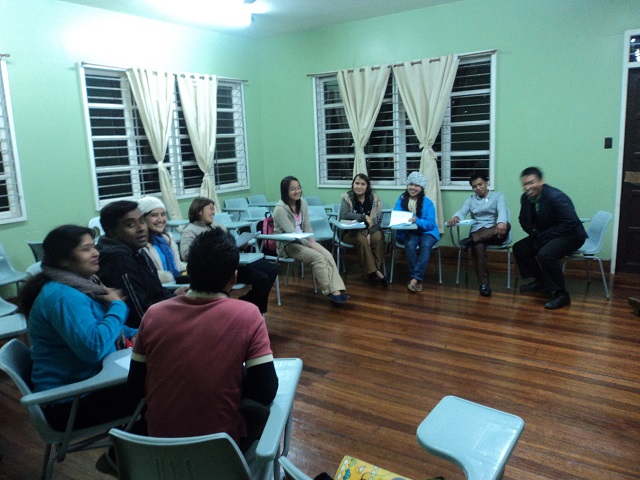
We recently started our Mini-Workshop series. It started last year with two trainings related to disaster response and stress defusing. This year we started with “Intentional Conversation” especialy focusing on the use of intentional conversation in gaining understanding and or seeking change in a relationship. DSC03924

We had 38 attendees with 1 hour of more standard lecture and an hour of group discussion and roleplay. Thanks to PBTS for giving us space to use for this training, as well as providing snacks for attendees.

We are looking into doing our next Mini-Workshop in February on the topic of “Mediation.”

The elephant in the room at Christmas

Sally and Paul Nash's avatarMarker Posts and Shelters

Elephant in the room

Are you looking forward to Christmas? How easy is it to answer no if that is the truthful answer?
There are all sorts of reasons why Christmas is difficult. The first Christmas after a loss whether through bereavement or divorce or break up or moving is always difficult. Memories flood back of happier times or just different times that we were more comfortable with. I can never see the film ET without remembering that was the last Christmas Dad was with us.

In some of the work I have been doing around Christmas I have tried to at least hint at elephants in the room, those we have lost, our own insecurities, feelings of marginalization, risk taking, the future…

As we spend time with our families and friends over Christmas there may be a whole load of taboo subjects we ignore and it is reassuring for me that this may…

View original post 301 more words

The Psychological Health of Missionaries—Adding to the Research

Craig Thompson's avatarClearing Customs

6903821997_e0a95ce498_nHere’s a quick question:

What percentage of returned missionaries and aid workers report psychological disorders during their time overseas or shortly after their return? What do you think? About a quarter, a third, half, two thirds, three quarters?

According to a 1997 study conducted by Debbie Lovell-Hawker of Oxford University, the answer is “about half.” More precisely, Lovell-Hawker’s findings show that among the returned missionaries and aid workers she studied,

46% reported that they had experienced a clinically diagnosed psychological disorder either while working overseas or shortly after returning to the United Kingdom.

Before I went overseas, I would have guessed much lower than half, but after I first heard this statistic referenced in a debriefing I attended, in my mind, the number began to grow much higher than 46%. Statistics have a way of doing that.

Lovell-Hawker’s research included 145 aid and development workers and missionaries from 62 organizations. Though…

View original post 1,164 more words

Honest Christianity – we can’t do this alone

Nice thoughts on important relationships based on:
Leonard Sweet. 11 indispensable relationships you can’t be without. Eastbourne: David Cook 2008.
P D Stanley, J R Clinton Connecting. Colorado Springs: Navpress 1992.

Sally and Paul Nash's avatarMarker Posts and Shelters

Northumberland-20120717-00309This is our 100th blog post, mere newcomers compared to many, but we are encouraged to get to this marker post still being enthusiastic about what we are doing! There was always the slight fear that it would become just one more thing on the to-do list. We thought and prayed about what to write about as well as whether or not we should mark 100. WordPress helpfully tells you what number post the lastest one has been – otherwise we would have no idea!

What we have decided to talk about is significant relationships which in part has been inspired by reading Stanley and Clinton’s book Connecting many, many years ago and more recently Leonard Sweet’s book, 11 indispensable relationships you can’t be without.

what had we done, what would be good to reflect about on this marker? We have gone for significant relationships. Last year, Paul, inspired by books…

View original post 511 more words

August 2013 Updates

Some Updates:
-Aug 13. “Growth Groups” class starts at PBTS, 8 weeks duration. Taught by Joyce.
-Aug 17. Start of Batch 2013-4 Half unit led by Celia.
-Aug 19. Final Unit Evals for CPE 2013-3
-Aug 19. North Central Luzon ( NCL) CPSP Chapter Meeting.
-Aug 27. Benguet CPSP Chapter Meeting
-Aug 29. CPSP BOT and Conveners Meeting.
-Sep 5. Baguio CPSP Chapter Meeting

Late July 2013 Updates

1. The CPE Group led by Joyce had their mid-unit evaluation at Winaca Eco Park in Benguet. They had a great time in a beautiful place.

ABC.jpg

2. On July 25th, we had a “field trip” to SLU-Sunflower Children’s Center. They were founded by Father Geraldo Acosta years ago and focuses on Play Therapy with children. We appreciate Jennifer, Father Acosta and others on the staff who were so welcoming. We have to refer some cases to others and the visit was very helpful to us with regards to this as well as cross-training opportunities.

3.  In the first week of August, we expect to go down to Pampanga to do training and evaluation with regards to a unique and challenging ministry there. We will hold off on details in this area… waiting to ensure that this happens.

4.  August 17 is the expected date of an Extended Half-Unit of CPE, led by Celia. Email us at info@bukallife.org if you have any questions or concerns.At Sunflower

Nancy Berns: “Closure Doesn’t Exist,” Let Grief and Joy Be Intertwined

Craig Thompson's avatarClearing Customs

4677361453_f392fc8e47_n“What have you grieved in the past?” asks Nancy Berns, a sociologist at Drake University. “What might you grieve in the future? And some of you are grieving today. It’s not just the death of loved ones that we grieve. Our life is full of losses.”

These include the losses associated with transitioning between homes and cultures, away from family, friends, and the familiar.

When faced with that grief, we usually look for ways to move on, to find closure. But according to Berns, “Closure doesn’t even exist. It’s a made up concept that we use to talk about loss and grief.” And trying to gain closure “can do more harm than good.”

in her TEDxDesMoines talk below, Berns, author of Closure: The Rush to End Grief and What It Costs Us, says that we shouldn’t box up our pain, close the lid, and walk away to look for…

View original post 295 more words

Graduation, CPE-Intensive

The Graduation and Closing Ceremony for Clinical Pastoral Education/Training Summer Intensive 2012 is on Friday, May 31, 2013. It will be at 9am at West Baguio Baptist Church. The church is located at the corner of Naguilian Road and Quezon Hill Road #2 in Baguio City.

At our Office

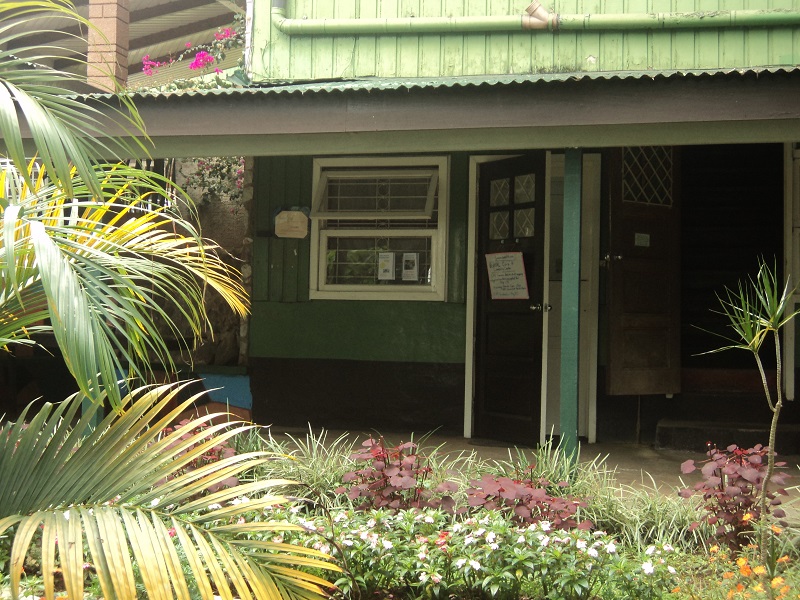
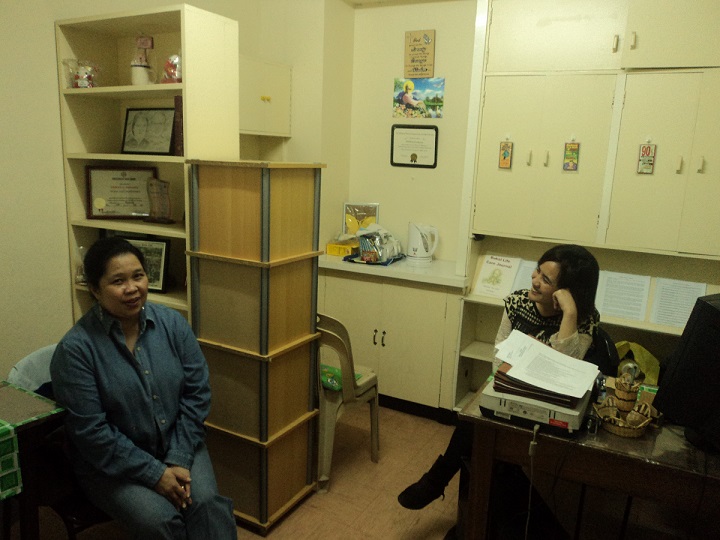
Office 2 Office 1We are thankful to Philippine Baptist Theological Seminary for giving us space to use as our office. We are located on the bottom floor of ZDH building at PBTS, 19 Tacay Road, Baguio City.