Visioning Weekend

10406830_10152648304637622_8839484526484694035_n

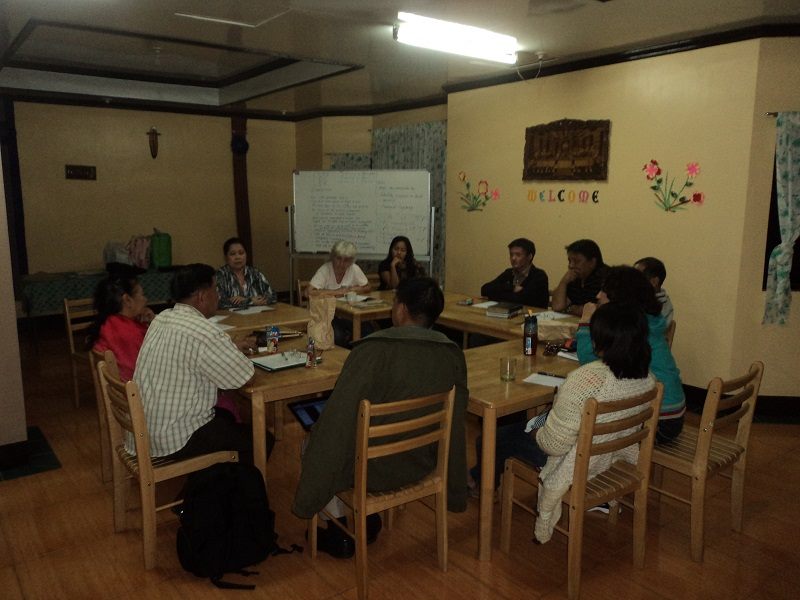
We held a gathering of staff and trustees of Bukal Life Care on August 31 and September 1st. Thirteen attended. We were hosted at the Mission Center of the Sisters of the Immaculate Heart of Mary, in Baguio City. A number of issues were dealt with.

A few items:

1.  Priorities. We are actively involved in a number of ministries… far more than our group can handle well with our limited financial and human resources. Based on our brainstorming, the following were identified as priorities:

  • Clinical Pastoral Training (CPE/CPT). Hospital ministry
  • Disaster Response Training, and crisis response work
  • Pastoral Care Training and Ministry

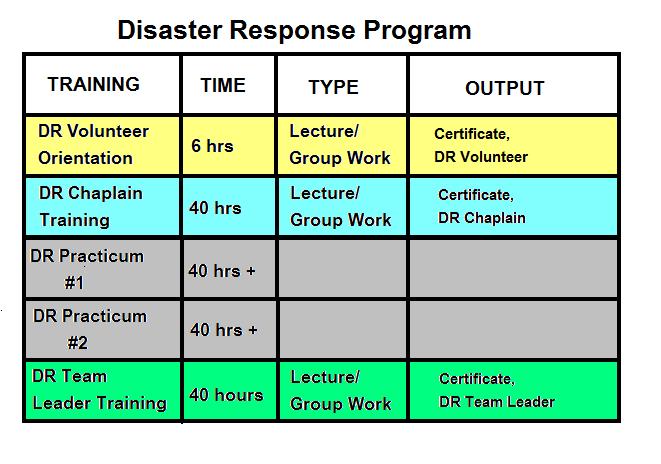
2.  Ladderization. Develop training programs that are all of certification and progression.  For example, for Disaster Response:

DR Training Program3.  Improve our financial structure and office management.

There are more things… but this is a good start for now. We are so thankful to those who joined and added insights. We are also appreciative of our great hosts.

Personalities, Profiles, Preferences, and Crossing Cultures

Craig Thompson's avatarClearing Customs

795619869_c1c80a9a37_zWhat personality types make for the best cross-cultural workers? I like to think that there’s room for all kinds, but it makes sense that certain types of people would find themselves drawn to or more suited for vocations that cross cultures.

When Peter Farley surveyed female missionaries from the UK, he found that, using the Myers-Briggs scale, there  are more “intuitive” (N) and less “sensing” (S) women among missionaries than in the general population. (The numbers are 42% Ns and 58% Ss among missionary women compared to 21% Ns and 79% Ss as a norm). The most common personality type is ISFJ, at 23%, but that is similar to the overall female population, while INFJs make up 12% of female missionaries, significantly more than the 2% norm.

Erin Meyer, author of The Culture Map: Breaking Through the Invisible Boundaries of Global Business, has a different scale for evaluating personality. It’s the “Culture Profile.” By answering the 24…

View original post 428 more words

For Global Nomads, a Better Question than “Where Are You From?”

Craig Thompson's avatarClearing Customs

3117467895_011eeea741_zLast week I had the extreme pleasure of meeting with a small group who came together as Global Nomads.

The vocabulary in the conversations was peppered with insider words and phrases. Of course there was global nomad itself, as well as TCK and Adult Third Culture Kid and army brat and MK. But there was also talk of using “English English” and recognizing something as “weirdly comforting.”

No one was in charge. No one gave a prepared presentation. Instead, we just talked. It was kind of like a panel discussion where the audience was the panel itself.

Everyone there was a professional in higher education, but the backgrounds and countries represented were diverse. I was the first one to arrive, and as others came into the room, I asked them, out of habit, “Where are you from?” I only meant “Where do you live?” or “Where did you arrive here from?” I really…

View original post 429 more words

Listening and the Spirit of Unhurried Leisure

Craig Thompson's avatarClearing Customs

9563583010_8d7fb48cc5_z

“Get busy.”

That’s the mantra of many a boss.

“Look busy.”

That’s what coworkers say when the boss is coming.

Busyness isn’t always a synonym for work. In fact, busyness can get in the way of productivity.

Eugene Peterson, best known for his translation of the Bible, The Message, also served as a pastor of Christ Our King Presbyterian Church in Bel Air, Maryland, for 30 years. One of the consistent themes in his teaching and writing is that pastors should not fall into the seductive trap of busyness. Instead, as he writes in “The Unbusy Pastor,” his goal in his role as a church leader was to do three things, things that are too easily pushed aside by a busy life: to pray, to preach, and to listen.

Listening, he says, needs “unhurried leisure.” This leisure is the opposite of busyness. And just as busyness does not equal work…

View original post 408 more words

Repost: Are You Listening? Really Listening?

Craig Thompson's avatarClearing Customs

[My family is moving across town this week, so I haven’t been able to work on the blog much lately. So here’s a repost from about a year and a half ago. This transition thing can feel like Frost’s “miles to go before I sleep.” But until that rest comes, I’ll look for a park bench along the way.]

Finding good listeners is very important to missionaries. In fact, when member-care trainer Brenda Bosch surveyed missionaries about what they wanted from their mission agency, the top answer was “someone to listen to me.”

German theologian Dietrich Bonhoeffer writes that listening is necessary in Christian community. He calls it the “first service” that Christians owe each other:

Just as our love for God begins with listening to God’s Word, the beginning of love for other Christians is learning to listen to them. God’s love for us is shown by the fact that God not only…

View original post 493 more words

What is “Life Care”?

Okay, have to admit the term “Life Care” is somewhat of a made-up term. Of course there are a lot of mad-up terms that have become accepted ways of describing different types of care. For us, the expression describes much of what we do, and can be divided into three broad areas of care:

1. Pastoral Care. Pastoral Care is a broad term for care within a faith context. There are four broad categories that pastoral care cover. These are:

  • Healing
  • Guidinglife care
  • Sustaining
  • Reconciling

2.  Crisis Care.  Crisis Care focuses on lives  torn apart due to major loss, disaster (particularly group or community disasters), and trauma. The focus is on defusing, debriefing, and education. Care applies to primary victims, secondary victims, and “hidden” victims.

3.  Member Care. Member Care covers the broad network of support associated with the life cycle of a professional in ministry (and family and team). Most commonly, member care here relates to missionaries or ministry professionals.

You could say that Crisis Care is Pastoral Care for those suffering from excessive stress or trauma. Member Care is Pastoral Care for those with long-term stress due to professional ministry.

Intentional Conversation Mini-Workshop

DSC03920

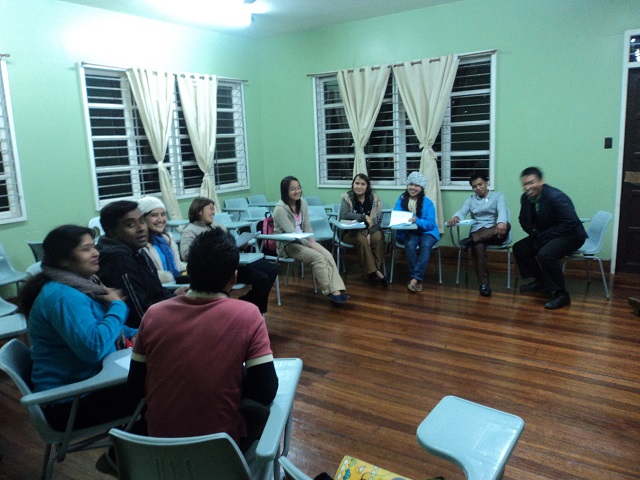
We recently started our Mini-Workshop series. It started last year with two trainings related to disaster response and stress defusing. This year we started with “Intentional Conversation” especialy focusing on the use of intentional conversation in gaining understanding and or seeking change in a relationship. DSC03924

We had 38 attendees with 1 hour of more standard lecture and an hour of group discussion and roleplay. Thanks to PBTS for giving us space to use for this training, as well as providing snacks for attendees.

We are looking into doing our next Mini-Workshop in February on the topic of “Mediation.”

The elephant in the room at Christmas

Sally and Paul Nash's avatarMarker Posts and Shelters

Elephant in the room

Are you looking forward to Christmas? How easy is it to answer no if that is the truthful answer?
There are all sorts of reasons why Christmas is difficult. The first Christmas after a loss whether through bereavement or divorce or break up or moving is always difficult. Memories flood back of happier times or just different times that we were more comfortable with. I can never see the film ET without remembering that was the last Christmas Dad was with us.

In some of the work I have been doing around Christmas I have tried to at least hint at elephants in the room, those we have lost, our own insecurities, feelings of marginalization, risk taking, the future…

As we spend time with our families and friends over Christmas there may be a whole load of taboo subjects we ignore and it is reassuring for me that this may…

View original post 301 more words