
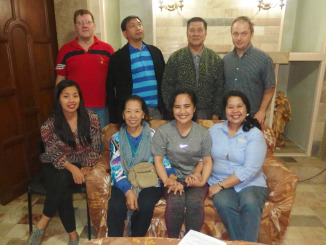
 CPSP-Philippines had its annual Board of Trustees meeting on January 14, 2017, at the Munsons residence with 9 in attendance, inclusive of 4 out of the 5 trustees. A few major items from the meetin…
Source: Annual Board Meeting 2017
CPSP-Philippines had its annual Board of Trustees meeting on January 14, 2017, at the Munsons residence with 9 in attendance, inclusive of 4 out of the 5 trustees. A few major items from the meetin…
Source: Annual Board Meeting 2017
There are a couple of major Pastoral Care Conferences in Baguio City, in the next few months.
A. April, 2017. Information below:

B. January 2018. The Grimes, Relationship Trainers and Consultants will join the Lide-Walker Bible Conference, at Philippine Baptist Theological Seminary, Baguio City.

These are partnerships between Philippine Baptist Theological Seminary and Bukal Life Care
I recently wrote about Steve Saint’s travels with Mincaye, when Steve—the son of martyred missionary Nate Saint—was logging thousands of miles on his way to speak to thousands. But that was b…
Source: Vulnerability: Letting Others See What Is Hard to Look at Ourselves
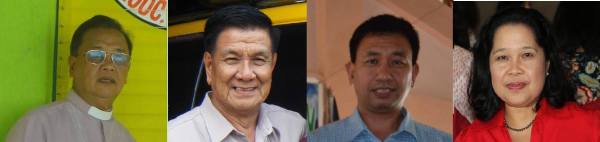
Four Clinical Pastoral Education Supervisors-in-Training (SIT) with CPSP-Philippines have, with the agreement of the General Secretary of CPSP, been promoted to “Diplomate in Supervision of Clinical Pastoral Education/Training” (Or “CPE Supervisor”). All four have been active in Clinical Pastoral Education as both trainees and SITs for years– two of them for decades. Of these four, three of them have a direct relationship with Bukal Life Care. The fourth, Dr. Cal Sodoy, a fellow colleague through CPSP-Philippines and head of Clinical Pastoral and Spiritual Care Training Center, we congratulate as well for this accomplishment.
The three are Ms. Celia Munson, Dr. Paul Tabon, and Dr. Sim Dang-Awan Jr. Celia was a founding member of Bukal Life Care and CPSP-Philippines, and an SIT since 2011. Doc Paul, a founding member of CPSP-Philippines, presently serves as its Board President. Both Celia and Paul are now CPE supervisors with Bukal Life Care. Doc Sim is the founder of New Heights Coaching and Development Center, and is presently serving as the head chaplain at Mary Johnston Hospital in Manila. Doc Sim also is on the Board of Trustees of Bukal Life Care.
We do have a few items for sale at our office:
The normal online cost for the above books is about $9 or $10, so this is quite a savings. The shirts are unavailable online, but they are still a good savings regardless.


Held Hospital Ministry Orientation at Christ Life Church on July 2nd… with 10 trainees. It was led by Bob, Celia, and German. Part 2 will be on July 9th, joined also by the trainees from Ministry Heartlink.


We have been getting an increase number of inquiries regarding what we do, and what we don’t do. Here are a few that may be of help
—Do we provide Residential service treatments?
No. We do have some clients who come and stay for a few days. We are on the beautiful campus of Philippine Baptist Theological Seminary, and they have nice, reasonably priced rooms for a short visit. However, that is to be arranged with the seminary, and we do not provide care services outside of the normal pastoral care sessions. For example, for those who need 24 hour care in the treatment of addiction, we lack the facilities, personnel, and program to address this.
—Do we treat major psychoemotional problems?
Generally no. It depends on what one considers “major.” However, we are trained in historical pastoral care and clinical pastoral care. Psychotherapy, as practiced by psychologists and psychiatrists to treat major DSM-V problems, we leave to these experts. Generally, we hold to the 4-fold model of historical pastoral care as defined by Clebsch & Jaekle. We involve ourselves in:
<Note: It is true that we do periodically evaluate clients and refer them to professional psychotherapy specialists. On occasion we assist the psychologist in the treatment… but that is not normally the case.>
—Do we do “Biblical Counseling”?
It depends what one means by this. If one means nouthetic counseling, or the counseling in the tradition of Jay Adams, the answer is No. We draw heavily from theological insights, but are comfortable to intentionally accept insight from psychological insights. As such, our care is more in line with the following “schools” of care:
That being said, some problems point to treatments that are more in line with the Biblical Counseling Movement, and we will use those methods (such as for unresolved sin, and issues regarding grace and forgiveness) when appropriate.
—Do we do “Delivierance Ministry”?
While having a number of meanings, this commonly relates to issues regarding demon oppression and seeking miraculous healings of various sorts.Acknowledging the various controversies in this particular form of ministry, we choose generally to leave this form of care to those who feel they are gifted in it.
However, we certainly recognize the power of God as the “Great Physician” and will commonly join the client in prayer, if that is his or her desire.
—Are we Counselors or Psychotherapists?
In terms of Philippine Law, the answer is No. While we work with counselors and psychotherapists (as defined by the Professional Regulatory Commission of the Philippines), as a group, our care is pastoral care, also known by some as spiritual care. Our certification for our care providers is via CPSP, an international pastoral care, pastoral supervision, and clinical chaplaincy certifier. Their website is HERE
<We do at times have team members who are also certified by the PRC in guidance and counseling, but our focus is in pastoral care.>
—Do we charge for services?
We do not charge for pastoral care services. Donations are certainly welcomed, but they are neither expected, nor encouraged. We do charge for some trainings, especially Clinical Pastoral Education (CPE) and Clinical Pastoral Orientation (CPO).
—What are our Office Hours?
To be honest, we don’t hold consistent office hours. We are a group of volunteers. Our office is commonly open during certain periods of time— especially during CPE training periods, but still prefer to be contacted to arrange an appointment. If you just decide to drop in, there is a good chance our doors will be closed, or if open, we may be busy with training or counseling sessions.
 Here is a birds-eye look at where we are and what is coming along down the line.
Present
June-July
August and Beyond
Commissioning Service for Celia’s CPE Summer Intensive Group. Held on May 27, 2016.


In our time we have been uprooted from our former homeland, adrift in a mobile and changing society. We are lonely in crowds who seem not to care, pushed to and from by machines to serve and be served, until we too become mechanical and act like machines. We meet the other persons as strangers, but mostly by external contacts passing by or bouncing away as if we were rubber balls. We… do not know the inner life of other persons, and so we give attention mainly to the external appearances. Estranged from them or used by them, we are empty within ourselves, lost souls for whom no one seems to care. The need has never been so urgent for someone to care. How can a pastor care for his people in such a world?
Paul E. Johnson (1965)
Paul E. Johnson was a Methodist minister, involved early on in the Pastoral Care movement. This quote comes from an article he wrote for the “Christian Advocate” entitled “Where We Are Now In Pastoral Care” (23 SEP 1965, page 7). Sadly, I have not so far found a copy of this article, and so rely on the quote here that was used by Howard Clinebell in “Basic Types of Pastoral Care & Counseling,” Chapter 3. This quote seemed current, I am sure in 1965, but if anything is more so today.

