Pastoral Care According to St. Gregory of Nazianzus

St. Gregory of Nazianzus (circa 329AD-390AD) was one of the Cappadocian Fathers and had a great influence on the early (post-Nicene) church.

He also had a great impact on Pastoral Care, especially in what is known as his Second Oration. Here he notes the similarities between pastoral care and medical care, noting that it requires great wisdom because each case is unique. Below is an excerpt from that document. However, if you want to read a translation of the entire document, you can go and CLICK HERE.

It is worth nothing that Pope Gregory the Great’s “Pastoral Care,” although written centuries later, draws heavily from this document.

30. As then the same medicine and the same food are not in every case administered to men’s bodies, but a difference is made according to their degree of health or infirmity; so also are souls treated with varying instruction and guidance. To this treatment witness is borne by those who have had experience of it. Some are led by doctrine, others trained by example; some need the spur, others the curb; some are sluggish and hard to rouse to the good, and must be stirred up by being smitten with the word; others are immoderately fervent in spirit, with impulses difficult to restrain, like thoroughbred colts, who run wide of the turning post, and to improve them the word must have a restraining and checking influence.

31. Some are benefited by praise, others by blame, both being applied in season; while if out of season, or unreasonable, they are injurious; some are set right by encouragement, others by rebuke; some, when taken to task in public, others, when privately corrected. For some are wont to despise private admonitions, but are recalled to their senses by the condemnation of a number of people, while others, who would grow reckless under reproof openly given, accept rebuke because it is in secret, and yield obedience in return for sympathy.

32. Upon some it is needful to keep a close watch, even in the minutest details, because if they think they are unperceived (as they would contrive to be), they are puffed up with the idea of their own wisdom. Of others it is better to take no notice, but seeing not to see, and hearing not to hear them, according to the proverb, that we may not drive them to despair, under the depressing influence of repeated reproofs, and at last to utter recklessness, when they have lost the sense of self-respect, the source of persuasiveness. In some cases we must even be angry, without feeling angry, or treat them with a disdain we do not feel, or manifest despair, though we do not really despair of them, according to the needs of their nature. Others again we must treat with condescension and lowliness, aiding them readily to conceive a hope of better things. Some it is often more advantageous to conquer — by others to be overcome, and to praise or deprecate, in one case wealth and power, in another poverty and failure.

33. For our treatment does not correspond with virtue and vice, one of which is most excellent and beneficial at all times and in all cases, and the other most evil and harmful; and, instead of one and the same of our medicines invariably proving either most wholesome or most dangerous in the same cases — be it severity or gentleness, or any of the others which we have enumerated — in some cases it proves good and useful, in others again it has the contrary effect, according, I suppose, as time and circumstance and the disposition of the patient admit. Now to set before you the distinction between all these things, and give you a perfectly exact view of them, so that you may in brief comprehend the medical art, is quite impossible, even for one in the highest degree qualified by care and skill: but actual experience and practice are requisite to form a medical system and a medical man.

34. This, however, I take to be generally admitted — that just as it is not safe for those who walk on a lofty tight rope to lean to either side, for even though the inclination seems slight, it has no slight consequences, but their safety depends upon their perfect balance: so in the case of one of us, if he leans to either side, whether from vice or ignorance, no slight danger of a fall into sin is incurred, both for himself and those who are led by him. But we must really walk in the King’s highway, and take care not to turn aside from it either to the right hand or to the left, as the Proverbs say. For such is the case with our passions , and such in this matter is the task of the good shepherd, if he is to know properly the souls of his flock, and to guide them according to the methods of a pastoral care which is right and just, and worthy of our true Shepherd.

New Edition of “Philippine Journal of Religious Studies”

The 2024 edition of the Philippine Journal of Religious Studies was just released today (August 16, 2024). Several of the articles explore the challenge of pain and suffering in those following Christ. If interested, the journal is freely available for download. It is available by going to:

Aren’t You the Group that Doesn’t Use the Bible?

The title is a question that our counseling center has been asked more than once. Our answer to that is “No.’ However, a better answer is “No, We definitely use the Bible… when it is appropriate.” Let’s talk about this…

There is a wide spectrum of perspectives with regards to the role of the Bible when it comes to Christian or Pastoral Counseling. At one end, the Bible has more of a symbolic role. It is valued because of what it symbolizes or what it means to the client. In other words, the Bible is valuable based on what people think about it, rather than what it is. We would view this as an inadequate position, while still recognizing that the symbolic value of the Bible should never be ignored.

At the other extreme are those that use the Bible as a counseling book, or even as their ONLY counseling book. For these, the Bible is “sufficient” for all questions relating to pastoral care and counseling. For example, if a person is struggling with moodiness or dysphoria, this sort of counselor is likely to open the Bible and start reading verses that he or she believes gives answers to this issue that will ‘fix things.” A sort of related group is Nuothetic Counseling. They also make strong use of the Bible. However, for them it is more common that problems are seen as springing from behavioral sin. Therefore the Bible is used to identify the sin and to call upon the client to confess, and then repent. So if someone comes who is moody or dysphoric, the goal would be to figure out in what way are they sinful, point to the Bible to where such a sin is identified, and then address the sin. Looking at the Bible as an ethical work or quote book is as inadequate.

Neither of the extremes describe how we use the Bible. The Bible is, first of all, a story book— telling the story of the complex relationship a loving God has for his, often unloving, creation. There is great wisdom, doctrines, ethics, and more in the Bible, but those are secondary to the overall story and theme of the Bible. It is within this story that we find our place and how we are to act. Our story becomes part of the story as well.

Consider the following Biblical passage

Praise be to the God and Father of our Lord Jesus Christ, the Father of compassion and the God of all comfort, who comforts us in all our troubles, so that we can comfort those in any trouble with the comfort we ourselves receive from God. For just as we share abundantly in the sufferings of Christ, so also our comfort abounds through Christ. If we are distressed, it is for your comfort and salvation; if we are comforted, it is for your comfort, which produces in you patient endurance of the same sufferings we suffer. And our hope for you is firm, because we know that just as you share in our sufferings, so also you share in our comfort.

II Corinthians 1:3-7

This is direct guidance in the Bible in how to do an aspect of pastoral care and counseling. The passage states that God comforts us in all of our troubles. That is comforting… it is a good statement of belief. However, it goes on to say that this comfort as we experience it in our lives is to help us to effectively comfort others who are suffering. The passage also goes on to explain that suffering is not always bad… in part because it leads to our recognizing God’s comfort in our lives, but also helps to develop patient endurance.

So what is a “Biblical” use of this particular passage. Most likely it is not simply quoting. . The client most likely is not experiencing that comfort simply by being told this. Quoting that verse does not suddenly give them that comfort, and the passage does not recommend it. It recommends that we share our own story of struggles and how God has proven ultimately faithful in bringing us through them.

Another way of saying it is that the passage suggest a number of things (if we are to break things into steps):

1. Listen and be present with those who are suffering. This seems to be implied in this passage. If you don’t feel so, don’t worry. Other parts of the Bible support this idea in both words and in examples.

2. Be empathetic to the troubles and sufferings of others because we have gone through our own troubles and sufferings.

3. Put ourselves “in their shoes”— in part because we HAVE been in those shoes— thus being slow to judge and slow to speak.

4. Share (cautiously, I think since we are not seeking to trample on their story with our own story) our struggles and how God has helped us through.

Of course, this is far from the full guidance on pastoral care and counseling. This is just one passage on one subtopic of PC&C. Still, proper use of the Bible is more about learning from the Bible and applying it, rather than simply quoting it. Consider Proverbs 15:22 ‘Plans fail for lack of counsel, but with many advisers they succeed.’ Or consider Proverbs 11:14, ‘Where there is no guidance, a people falls, but in an abundance of counselors there is safety.’ What type of counsel are these two passages suggesting. I would argue that certainly the most narrow understanding, quoting Bible verses, is not meant here. After all, if counsel is simply quoting Bible verses, it is hard to see how many advisors would be preferable to one. Presumably, good counsel would be express godly wisdom honed very much through an understanding of God’s will as seen in His Word, and through personal reflection and experience.

Do we use the Bible in our pastoral counseling? Absolutely. Do we fling around Bible verses? No. We use them when they are appropriate, but we are quick to listen, slow to speak (James 1:19-20), trying to treat everyone with gentleness and respect, focusing on what their concerns are (1 Peter 3:15), listening non-judgmentally (Matthew 7:1-3), dealing with each person compassionately (Ephesians 4:32).

Using the Bible is putting it into practice, not simply quoting it.

Publicly Broken

In sports recently, the issue of mental health has been a matter of focus. It began in the Olympics with Simone Biles. Then Michael Phelps brought his own perspective. More recently Naomi Osaka has reenergized the discussion with Tom Brady adding his thoughts, among many.

Many sports fans, and some sports commentators have been… less than sympathetic. This is hardly new. Roberto Duran was castigated by his fans (and foes) for “giving up” in his with Sugar Ray Leonard. Although he claimed he quit because of stomach cramps, many people saw it as a sign of weak character.

Some of this, however, is how it is framed. If Duran went back in the ring and allowed himself to be knocked out (perhaps taking a dive, perhaps just allowing his physical problem to play out) he probably would not have gotten as much grief. If Biles expressed her problems as being more physical than mental, or if Osaka had expressed things in terms of family issues or wanting to take a break, perhaps the responses would be different.

We have generally gotten comfortable with athletes “quitting” due to physical injury. We have also gotten somewhat comfortable with sports stars taking a break due to grief (such as death in the family). Less slack is given for issues of relationships and psychoemotional problems. Perhaps people are least in understanding of problems that come from what I might call spiritual problems. What I mean by that is struggles in terms of purpose, ethics, and character.

What can we say in response to this? I would suggest two things that, unfortunately, are somewhat in conflict with each other.

Thought #1. It is good to be able to speak honestly about one’s brokenness. It is good that one does not feel the need to make up fake reasons for struggles, or hide the struggles. Healing comes from identifying one’s brokenness and acting on it honestly. Deception, and especially self-deception, does not bring healing. Additionally, bringing problems out into the open can be good for other people, to come forward and get the public to talk about these issues.

Thought #2. As good as it is to talk honestly about one’s brokenness openly, it can be self-destructive to share with people who are judgmental or in other ways toxic. It is good to share with those who are trustworthy.

Ideally, one should find people that one can trust to talk about one’s areas of brokenness. For celebrities, this can be tough. Far too many people are invested in their lives. We call these people fans, but fans (derived from the term fanatic) are often not trustworthy people.

Religious leaders can also have the same problem. Some religious leaders are put up on a pedestal. It is difficult to talk about their spiritual brokenness (issues of purpose, ethics, and character). Both friends and foes can be toxic. It can be even a bigger concern in faith communities that spiritualize physical, relational, and psychoemotional problems (seeing them as sinful, or the result of personal sin).

We think of Heaven as a place of absence of problems or brokenness. That may be accurate. However, I would like to suggest a different image of Heaven. Heaven is a place of absolutely trustworthy relationships– a place where brokenness can be shared freely and openly because everyone will respond in a way that is supportive and therapeutic. Heaven is then a community of healing.

The Bible says that there is a day coming when Heaven comes to Earth— but that day has not yet arrived. We live in the tension between the two thoughts above. It is good to be open and public, but sharing with untrustworthy people causes serious problems.

For religious leaders, the following suggestions are worth considering:

  • Have a network of supporters (not fans). Supporters hold people accountable. Supporters listen and respond therapeutically.
  • Don’t put oneself on a pedestal. Others are less likely to do it if one does not do it oneself. Don’t try to put on an air of invulnerability or perfection.
  • Train one’s flock properly. Do not teach toxic theology that is more focused on judging than healing. Help them struggle with issues of theodicy and sin with wisdom.
  • Don’t be afraid to seek professional help. That is a sign of strength not weakness.

There will always be unhelpful friends and foes… but one can minimize their effect, allowing one to be publicly broken.

Cultural Psychology and Maslow

Consider for the moment Maslow’s Hierarchy of Needs.

Image result for maslow's hierarchy

As the theory goes, one cannot go to the next level of need until the lower ones are satisfied. This is not so much a proven truth, but a useful way of looking at things. However, typically, this hierarchy of needs is also used by many as a guide for healthy thought and living.

But is it?

Consider a different way of showing this pyramid.

Maslow

In this case, moving “up” the pyramid is moving to the right on the graph. The blue line shows whether the focus is on a person as a social being or as an individuated being. For PHYSIOLOGICAL NEEDS, one is focusing on what keeps body and soul together… so clearly the focus is on the individual (food, water, shelter, air, etc.). As one moves towards SAFETY AND SECURITY, one is now moving towards the more emotional and social aspects of a person. Few if any really feel safe or secure alone or socially disconnected. As such, there is a greater recognition of the person as a social being.

As one moves to the next level, LOVE AND BELONGINGNESS, there is the greatest recognition of a person as a social being. We were meant to be part of WE, not an aggregate of I’s. We are meant to be with others and part of others.

As one moves to the next higher level, SELF-ESTEEM, the social aspect of a person is focused on less. Abraham Maslow saw self-esteem as having an internal component and an external component. The external component is status and respect given to a person from one’s social web of connections. The internal component is the feeling of self-worth one gets through internal personal evaluation and validation.

<Note:  Some don’t agree with this. They suggest that one should not allow external influences have an impact on one’s self-esteem. However, since perhaps the only ones who can truly live through internal validation alone are the truly shameless, or perhaps the sociopathic, I am not so sure that this school of thought is worthy of embracing (at least at its extremes).>

The top level is SELF-ACTUALIZATION. This is “the full realization of one’s creative, intellectual, or social potential.” While Maslow did point out some famous people he considered to be self-actualized, he noted that fame had nothing to do with their status… it was about reaching their own individual potential, regardless of outside identification. As such, we have swung back fully to the individuated self and away from the social being.

But is this true?

Consider a story from the TV Show “House”  (Season 3, Episode 13).

In this episode, Dr. Foreman was working to diagnose and treat a 16 year old male of Romani (“gypsy”) heritage. He is found to be quite knowledgeable and intelligent and is seen by Dr. Foreman as having great potential in medicine if he would get further education and move into medical work. However, the young man has no interest in that. He is tightly connected to his family and Romani clan. As such, they have a strong influence on what he does. He doesn’t want to go against them or separate from them. The story ends somewhat unresolved. Dr. Foreman is saddened that the teenager rejects the possibility of living up to his potential in terms of a medical career. He also, however, seems a bit saddened to realize that in his quest to advance his career, he has given up a lot… in fact leaving behind family, and lacking, in many ways any deep relationships. Who has chosen the better path?

If one looks at the Hierarchy of Needs:

Both are okay in terms of physiological needs and safety and security (at least after the Romani teen was healed of his illness).

Both also seem to have decent self-esteem. Dr. Foreman is recognized as a very competent physician. If he lacks self-esteem, he hides it well enough. The Romani teen also seems to have good self-esteem. He appears to be very affirmed by a loving family, and seems to like the trajectory his life is on.

There are, however, differences. Dr. Foreman has a social deficient life… living alone, invested in his job over all other aspects of his life, and rather disconnected from his family. Still, he might be seen by Maslow as self-actualized since he appears to be living out his calling and potential as a physician.  For the Romani teen, he seems to be well positioned in a loving and supportive family so he has no problems in terms of love and belongingness. However, he would never be seen as self-actualized since his potential in terms of medical science will never be achieved if he stays on the path he is on.

Now consider this story as a parable in terms of East versus West of what is ideal. Dr. Foreman expresses the ideal of Western culture. He is highly individuated (as the term is used by Murray Bowen) from his birth family. He has found what is he is good at and gained expertise in it, and has achieved external fame, and appears to be  living up to his potential. He is living the ideal of Western culture. The teenager is of Romani heritage, which has many aspects of Eastern culture. In it, family and community have greater import. He is far less individuated. However, it is within that supportive structure that he finds his place and his meaning. As such he has great self-esteem that comes from affirmation of loved ones, and the opportunity to live out his potential as a social being, even if not as an individuated being.

I guess I would argue that Maslow’s Hierarchy of Needs, if it is used in terms of Positive Psychology, is culturally inadequate. One might suggest the following modification:

Maslow 2

With this figure, the bottom three steps stay the same. We all need these. However, when we get to Esteem there there can be a bit of a cultural split. With an Eastern focus, one may gain esteem more guided by affirmation from one’s social web— particularly family. The Western focus is less on external affirmation but on internal. Of course, these are not separated because in all people, esteem has an external and an internal component. It is just that the Eastern worldviews emphasize the external and the Western emphasizes the internal (at least in theory). From there things separate. In the Eastern worldview social actualization can be achieved in terms of finding one’s place in the world. One knows where one belongs in connection to others. In the Western worldview self actualization can be achieved in terms of finding one’s potential and achieving it.

Which one is better? I can’t say, but I doubt you can either. Each has its value but also its problems. On one side a person may feel trapped while on the other one may feel desperately lonely. The lack of perfection should hardly be surprising in an imperfect world. For this reason, there has been work in recent years on contextualized psychology. Bowen’s concept of individuation in family systems, and Maslow’s concept of self-actualization may be cultural ideals rather than universal ideals.

However, I think it is worth noting that the church may fit better into the Eastern worldview in terms of social self-actualization. While a lot has been written about how Christians can achieve their God-given dreams, actualizing their calling and gifting, much of the Biblical understanding of the church is in terms of social actualization. It is not about you or me or about your dreams or my dreams, but our place as members of one body, carrying out our social roles within a community structured more on love and belongingness than on merit and success.  This does not discount the other side, but I would suggest that far too many churches are filled with far too many disconnected and lonely people (“… where do they all come from.”). Perhaps it is time to consider a different model for church life and individual growth.

Addressing Questions of Suffering

Here is a quote by Howard Stone from “The Word of God and Pastoral Care”

Over the years, while making pastoral carecaution2bagainst2bbad2badvice visits and especially hospital visits, I have sadly encountered many people whose well-meaning friends and acquaintances have responded to their why questions with theological answers that left them terribly upset and proved actually to be destructive: ‘This is God’s punishment on you and for your sins.’ ‘This is God’s will; you have to accept it.’ ‘This has happened to bring you to the Lord.’ ‘God wanted your dear one with him in heaven.’ ‘If you hadn’t skipped out on your wife, this wouldn’t have happened.’ ‘If you had stayed home with your children where God wants you to be, they wouldn’t have started taking drugs.’

More recently I have also come across another whole class of answers — more psychological than religious — to theodicy issues: ‘You are responsible for your illness.’ ‘You are sick because of your destructive thoughts.’ ‘The cancer inside you is pent up anger; you’ve got to release it to get well.’ ‘You are what you eat; if only you had cut out salt and exercised more.’ Some people are so eager to give their answers that they scarcely wait for the questions to be asked. The results are often quite grim.

When I first began pastoral care work, I would have thought such pronouncements were rare, or occurred only in the more conservative denominations. Not so! Things such as this happen everywhere, regardless of the conservative or liberal orientation. Simplistic and damaging answers flow from well-meaning people at a time when their hearers are in considerable distress, vulnerable, and unable to talk back. I raise the issue here because if ministers care only for people’s emotional pain and do not respond theologically to the issue of theodicy, parishioners will inevitably get their theological education elsewhere, and it may not be the kind we would have wished for them. In other words, if ministers will not respond, sooner or later, to the vital questions of theodicy, neighbors and friends are likely to do so, and not always in a helpful manner.                                       –page 165

PDL: My Brothers and Sisters

For some people, PDL stands for “Purpose Driven Life.” Here in the Philippines, the initials have come to stand for “People Deprived of Liberty.” The following is a short reflection written by Chaplain German B. Ramboyong Jr. on his work with PDL.

November 25, 2016

People: Prisoners are people. When they were imprisoned, their nature did not change. They are still humans. They do not become aliens, different from us. It is easier for us to judge them than reach them. However, our Lord Jesus taught that if we visit them we do it for Him (Matthew 7:37-40). He even calls them “my brothers and sisters.” This is why I carry on: without Jesus I will not be able to be a person to the “my brothers and sisters” in the jail. Or as I would like to put it, “I visit and serve Jesus in the prison every Monday”.

Deprived: Yes! They are deprived of many things. They cannot work and provide for their love ones. They cannot sleep, eat, and drink well. They can not exercise their rights. It is as if everything has been stripped from them either voluntarily or by coercion. On the other hand, by visiting and talking with them I give them the privilege to exhale bothering thoughts, disappointments, worries, and inhale some encouragements and exhortations. Their cells, cases and circumstances may be suffocating but at least they have the luxury to breathe out. And I have joy in my heart to be such a channel of life for some of them.

Liberty: In some degree, the prisoners have independence. They are not totally constrained. They can choose to be confined physically or psychologically for quite a long time or they can opt to be free. Some can be quick and others in a slow progression. But still others are worse-‘ reclusion perpetua’ or life imprisonment. Yet there is hope. I heard how Jesus not only liberated some prisoners in the physical realm but more importantly, in spiritual realm.

As you have noticed, the words “people”, “deprived” and “liberty” are in bold face and they are in the beginning of each entries, because for me each word signifies my general learning regarding pastoral care in prison. I find it awesome that the government has designated the term “People deprived of liberty” to replace the notorious label “inmates” in reference to the prisoners. But I still would like to just follow the phrase of my Lord Jesus and call them “my brothers and sisters”?

Christmas Greetings from Bukal Life Care

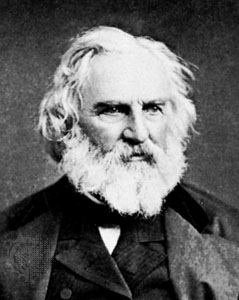
Henry Wadsworth Longfellow wrote the poem “Christmas Bells” during the American Civil War, arguably the first “modern war”– the bloodiest war in American history. Longfellow contrasts the church bells ringing celebration of the birth of Jesus Christ and the associated paean of the angelic hosts of “Peace on Earth, Goodwill to man,” with the violence of the war– a war commonly of Christian brother against Christian brother. Tied to this struggle, Longfellow had the tragedy of the recent death of his wife, and news of his son’s grave injury on the battlefield.

His resolution is similar to the book of Habakkuk, where tragedy and hope are allowed to intermingle.

ilongfl001p1

Henry Wadsworth Longfellow (1807-1882)where the tension of the contrast is allowed to remain… but with the confidence that God, ultimately, will prevail and bring peace and joy.

We at Bukal Life Care, wish you a blessed Holiday Season, and 2017. We know that some struggle to identify God’s blessing in their lives. It is beyond our ability to resolve this in your hearts and minds. For now, we can offer the words of two who have wrestled with the pain in life, and their ultimate faith in God’s goodwill. So here are  words of Longfellow (identified by many in the carol, “I Heard the Bells on Christmas Day”) and the last few verses from the Prophet Habakkuk.

Christmas Bells (1863)

By Henry Wadsworth Longfellow

    I HEARD the bells on Christmas Day
    Their old, familiar carols play,
        And wild and sweet
        The words repeat
    Of peace on earth, good-will to men!

    And thought how, as the day had come,
    The belfries of all Christendom
        Had rolled along
        The unbroken song
    Of peace on earth, good-will to men!

    Till ringing, singing on its way,
    The world revolved from night to day,
        A voice, a chime,
        A chant sublime
    Of peace on earth, good-will to men!

    Then from each black, accursed mouth
    The cannon thundered in the South,
        And with the sound
        The carols drowned
    Of peace on earth, good-will to men!

    It was as if an earthquake rent
    The hearth-stones of a continent,
        And made forlorn
        The households born
    Of peace on earth, good-will to men!

    And in despair I bowed my head;
    “There is no peace on earth,” I said;
        “For hate is strong,
        And mocks the song
    Of peace on earth, good-will to men!”

    Then pealed the bells more loud and deep:
    “God is not dead, nor doth He sleep;
        The Wrong shall fail,
        The Right prevail,
    With peace on earth, good-will to men.”


Though the fig tree does not bud
and there is no fruit on the vines,
though the olive crop fails
and the fields produce no food,
though there are no sheep in the pen
and no cattle in the stalls,
yet I will triumph in Yahweh;
I will rejoice in the God of my salvation!
Yahweh my Lord is my strength;
He makes my feet like those of a deer
and enables me to walk on mountain heights!
                   Habakkuk 3:17-19

oct-a

Ministerial Burnout

burnoutAn article that relates to Ministerial Burnout, written by Bob Munson (administrator of Bukal Life Care) can be found:      Click Here

Necessity of Theology and Ethics in Pastoral Care

A question can be asked as to whether there is a role for pastoral care. While pastoral care has centuries (millenia) of experience… the last 100 years has seen growth of alternatives for psychoemotional care.

Consider 6 possible (or at least potential) views regarding therapeutic care for those with psychoemotional problems. (These are listed by H. Newton Malony in “The Demise and Rebirth of the Chaplaincy” Journal of Pastoral Care, Vol. 29, 1975)

  1. Biophysical. The psychoemotional problems stem from problems with the physical body.

  2. Intrapsychic. The problems stem from bad mental processes/conflicts going on within the mind.

  3. Behavioral. The problem is bad learned habits that must be unlearned/replaced.

  4. Socioeconomic. The problem is the environment the person is in. It is necessary to change the setting.

  5. Meaning. The problem is that the individual has failed to gain a sense or purpose or meaning in life.

  6. Morality. The problem is conflict between actions and sense of moral obligations and social responsibilities.

Psychiatrists may be generally thought of when it comes to the first of these (mental care tied to medicine). Psychologists of different flavors may work primarily in the 2nd and 3rd areas. Perhaps social workers would focus in the 4th area. But who can handle the 5th or 6th areas?

It seems pretty obvious that those specializing in pastoral care (pastoral counseling, pastoral psychotherapy) should be the one’s prepared to work in these areas.

Why?

First, the concerns of meaning and purpose are essentially theological or religious concerns. Religion speaks to the great mysteries… Why am I here? What is my purpose? Is this all there is? Who am I? Theology reflects upon these religious questions. These can also be described as the issues of spirituality. Sadly today, “spirituality” often implies a vague pleasant mysticism, but “spiritus” has more of an idea of “empowered meaning” or “enlivened purpose.” Dealing with issues of meaning and purpose are clearly to be in the skill set of a pastoral care provider since it is the realm of religion, theology, spirituality.

Second, the concerns of morality or social obligation are issues of ethics, of axiology. Dealing with choices as they pertain to what the individual believes his obligations are to God, to society, and to “what is right” is certainly supposed to be the domain of one trained in religious or pastoral care.

But is this true?

Sadly, this often is not very true. Theological training for pastoral care providers is often quite weak. Much of the training of pastoral care is more in the first four areas… particularly in the 2nd area. Is that wrong? Well, it is not wrong that pastoral care providers be trained in psychological principles. But if the focus is so strong that their theological integration is poor, the result can be that a pastoral care provider is one who essentially practices psychology– but with less skill than a real psychologist. Additionally, there is a strange reticence to give moral guidance in pastoral care. Perhaps this is a reaction to those who are often all too happy to provide quick and easy guidance… often with an ethical base little above Biblical verse dropping.

Pastoral Care Providers need a solid, reflective, nuanced understanding of theology, particularly as it relates to meaning and purpose, and as it relates ot making wise ethical choices. Pastoral Care should follow the wisdom of Psalm 23 in gently leading/guiding. This contrasts the polemic approach of some in ministry. But it also contrasts with the Rogerian “client-centered” approach that fails to give external guidance.

Summarizing, a solid pastoral care provider needs a mature understanding of his or her faith within the context of sound psychoemotional therapeutic principles and methods. If this is the case, such a person is competent to deal with the 5th and 6th areas of psychoemotional concern… areas that others have little to no competence in.

One may want to read an old, but good, article.  Has Ministry’s Nerve Been Cut by the Pastoral Counseling Movement? by Gaylord Noyce (1978)